Candide at LA Opera: Opening Night at the Dorothy Chandler Pavilion

Candide: Optimism, Interrogated in Rococo
📷 photos by LA opera

Optimism is the only philosophy required to survive its own refutation nightly, in public, at full volume, and still land the high note.

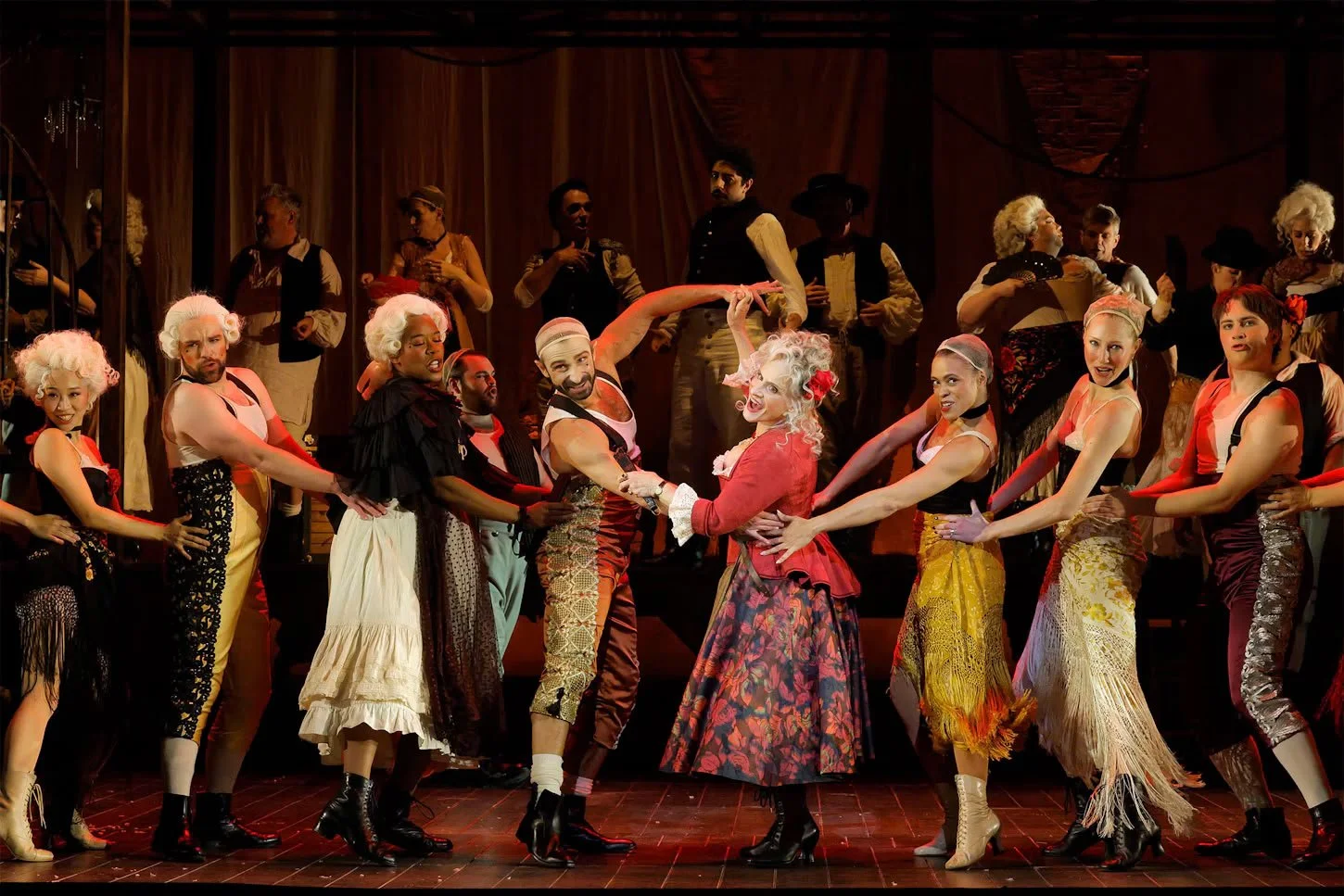
Opening night at LA Opera began the right way, with a conversation, and then the work itself took over the argument: Candide at the Dorothy Chandler Pavilion, Leonard Bernstein's hybrid of opera and Broadway, in Francesca Zambello's production, conducted by Resident Conductor Lina González-Granados. The source is the sharpest short novel ever smuggled into the canon, Voltaire's Candide of 1759, and the evening makes full sense once you hold that lineage in view. Voltaire wrote his novella as an assassination, aimed at the fashionable metaphysics of his century, the doctrine, borrowed from Leibniz and put into the mouth of the tutor Dr. Pangloss, that we live in the best of all possible worlds. Bernstein, two centuries later, understood that the correct weapon against a complacent idea is not a lecture but a tune you cannot stop humming. The satire sings. That is why it survives.

The plot is a controlled experiment disguised as a picaresque. Candide, played by Duke Kim with the exact luminosity the role demands, a goodness so sincere it functions as instrumentation, is expelled from paradise and sent through the institutions of his world one by one: war, the Church and its Inquisition, wealth, colonial adventure, love itself in the person of Meghan Picerno's Cunegonde. Each system receives him with a theory, and each theory fails him in practice, and Pangloss, played by Scott Bakula, who doubles as Voltaire himself, the author narrating his own trap, simply adjusts the doctrine and continues. Here is the sociological core of the piece, and the reason it plays in 2026 like it was written last spring. Optimism, Candide proposes, is rarely a conclusion drawn from evidence. It is a social technology, the ideology of those whom the world has not yet billed, a way of converting other people's catastrophes into one's own serenity. The comedy is the sound of that technology breaking, scene by scene, in the hands of a boy too honest to stop reporting what he sees.

And then there are the optics, which this production understands as argument rather than ornament. James Noone's sets and Jennifer Moeller's costumes deliver the eighteenth century in full Rococo bloom, all gilt and flourish and rapidly transforming splendor, while the narrative underneath keeps administering earthquakes, executions, and ruin. The eye is being offered the best of all possible worlds at the exact rate the ear is told it does not exist, and the friction between those two reports is the production's intelligence made visible. Patti LuPone's Old Lady anchors the lesson from the far side of experience: she has lost everything the plot can take, including, famously, a buttock, and she remains the most alive person on the stage, because her optimism has been replaced by something more durable, appetite for the next scene. Survival, in her performance, is not a philosophy. It is a practice.

Which is where Voltaire, and Bernstein after him, finally land their hero, and their audience. The novel's famous conclusion refuses both Pangloss and despair: we must cultivate our garden. Read after an evening like this one, the line stops sounding like resignation and starts sounding like the only serious program on offer, metaphysics retired in favor of work, the world improved at the scale of one's own hands. A conversation, a stage full of gilt ruins, a score that grins while it grieves. Candide makes sense because every century believes it has outgrown the need to be told that hope is a discipline rather than a mood. Every century is wrong in the same way, and every century, luckily, gets its production.

Yi Zhou
Glory Domesticated: Reflections on Fame and Time at Coppola’s Museum


📷 photos courtesy of Francis Ford Coppola Winery

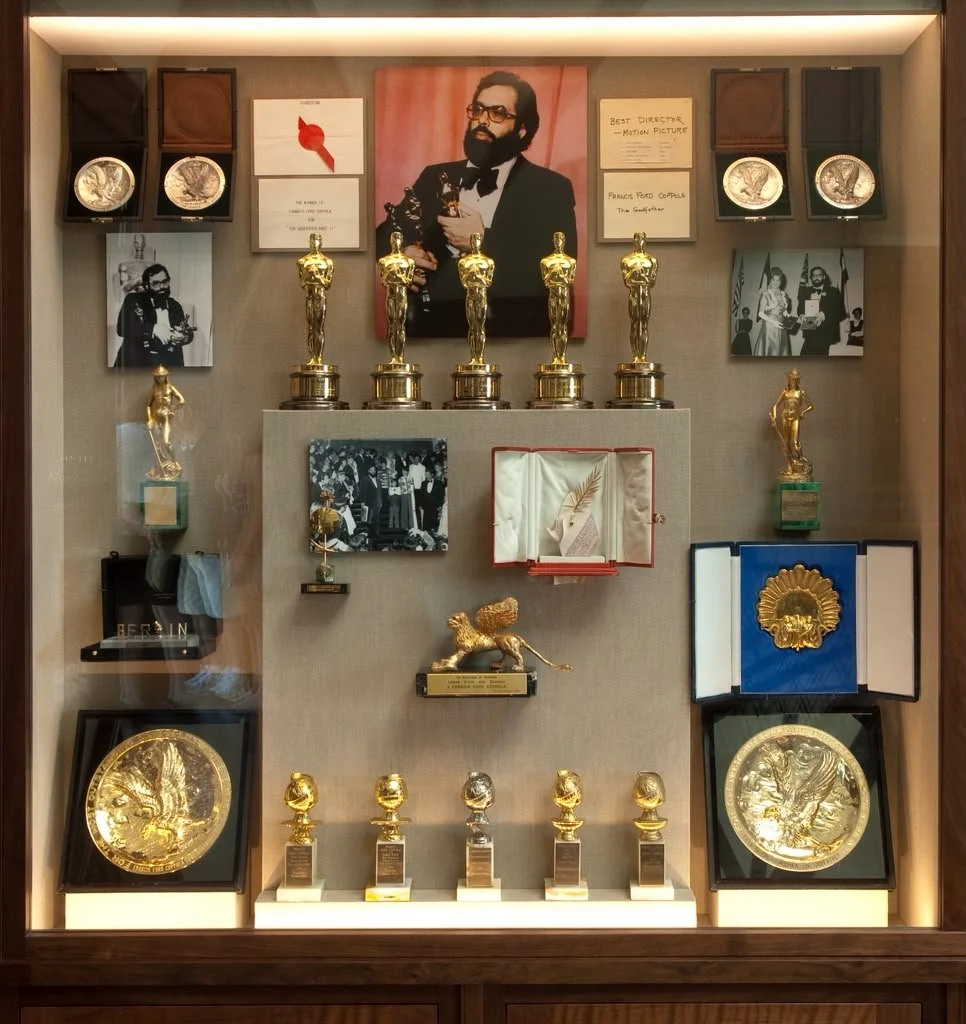
A photograph can hold an entire argument about fame, if the fame has been arranged honestly.

This one shows the awards case inside the museum at the Francis Ford Coppola Winery, and its power is in the inventory: five Academy Awards in a row, their gold catching the Sonoma light like a family portrait of everything the industry can give a person. Beside them, the Golden Globes. The Palme d'Or, which Cannes does not hand out carelessly. The Golden Lion of Venice. Half a century of verdicts, rendered in metal, gathered into a few feet of glass. Any one of these objects is the summit of a thousand careers that ended one envelope away. Here they stand together, at eye level, in a winery, while outside the windows the harvest does its unglamorous, eternal work of actually ripening.

The sociology of trophies is stranger than we admit. An award is applause, frozen at the exact temperature of one evening and then required to represent a lifetime. It does not age, which is its lie; the work ages, the artist ages, the audience that cheered has been replaced twice over, and still the statuette stands at permanent attention, insisting the moment is now. Coppola's arrangement quietly corrects the lie, and I think that is why the photograph moves me. He has placed the frozen applause in the one environment that understands time better than cinema does: a winery, where value is measured in years, where nothing is allowed to pretend that the vintage of a single night is the whole story. The gold does not dominate this estate. It resides in it, one citizen among the vines, the barrels, the desk from The Godfather, the red Tucker turning slowly nearby. Glory, domesticated, is glory finally telling the truth about itself: it was never the point. It was the receipt.

And there is a novelist's detail in the glass itself. You see the awards, and you see, faintly, your own reflection standing in front of them, every visitor briefly superimposed on the evidence, asking the question the case exists to ask: what would your shelf hold, and what did it cost, and was the work, in the end, worth more than the metal? Coppola, who risked his fortune on his films more than once, who mortgaged the present for the work again and again, has arranged his receipts where his wine sleeps, as if to file the final report of that lifelong wager: the gold stayed. The work stayed longer. Photograph the case and you photograph both, the applause and the silence after it, sharing one frame at last.

Yi Zhou

A Vigilance of Affection: Florian Zeller and Penélope Cruz on Bunker

📷 photos by Yi Zhou

Bunker: A Conversation in Bienveillance

There are panels, and then there are the rare conversations that remind you the whole industry is, at its best, an excuse for two artists to trust each other in public. Early yesterday morning in Los Angeles, Deadline Contenders offered one: Florian Zeller and Penélope Cruz, seated together to speak about Bunker, his as writer and director, hers as its beating heart.

What I watched, before I heard a single argument, was a relationship. The respect between them is not the ceremonial kind, the compliments traded like press releases at a junket. It is physical, habitual, unperformed. As he spoke, she would reach across the small distance between their chairs and gently touch his shoulder, at times rest her hand briefly on his thigh, with a gentleness and care and bienveillance that rearranged my understanding of what a press appearance can hold. Bienveillance is the French word, and I keep it in French because English keeps trying to flatten it into kindness, when it means something more active: a wishing well toward the other person, a vigilance of affection. She was, in the most literal sense, watching over his sentences while he delivered them, and he, you could see, writes inside the shelter of being watched over that way. Every director dreams of an actress who believes in the text before the camera does. Sitting there, belief looked like a hand on a shoulder.

And then she gave the morning its sentence. She spoke about reading the script for the first time, and about the feeling an actor waits whole careers to feel on a first read: that there was material in it for her, real material, pages she could do something with, a role built with enough interior weather that she could take creative flight. She said it plainly, the way she says everything, her speech concise and somehow deeper for its economy, no ornament, no anecdote fat, each sentence arriving like a note struck cleanly. Writers talk about giving an actor wings as a metaphor. She was describing the aerodynamics from inside the flight.

I keep thinking about the hour. It was early, Los Angeles early, the industry not yet caffeinated into its defenses, and into that unguarded hour came this small masterclass in how the work is supposed to feel from the inside: a writer who builds material worthy of flight, an actress who recognizes it on the page, and between them a bienveillance you could watch with the sound off. A true gift of a conversation, and the day had barely begun.

Yi Zhou

The Library and the Teepee

📷 photos courtesy of Francis Ford Coppola Winery and Yi Zhou Studio


The third day of looking at this estate, the theme finally declares itself, and it is not wine. It is childhood, preserved at industrial scale.

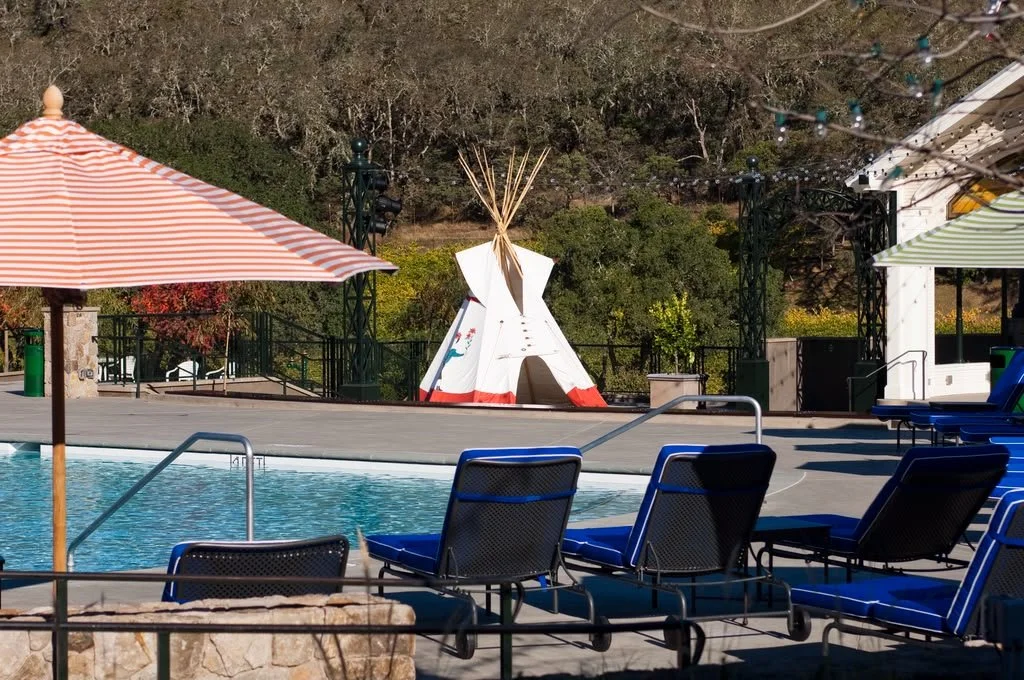
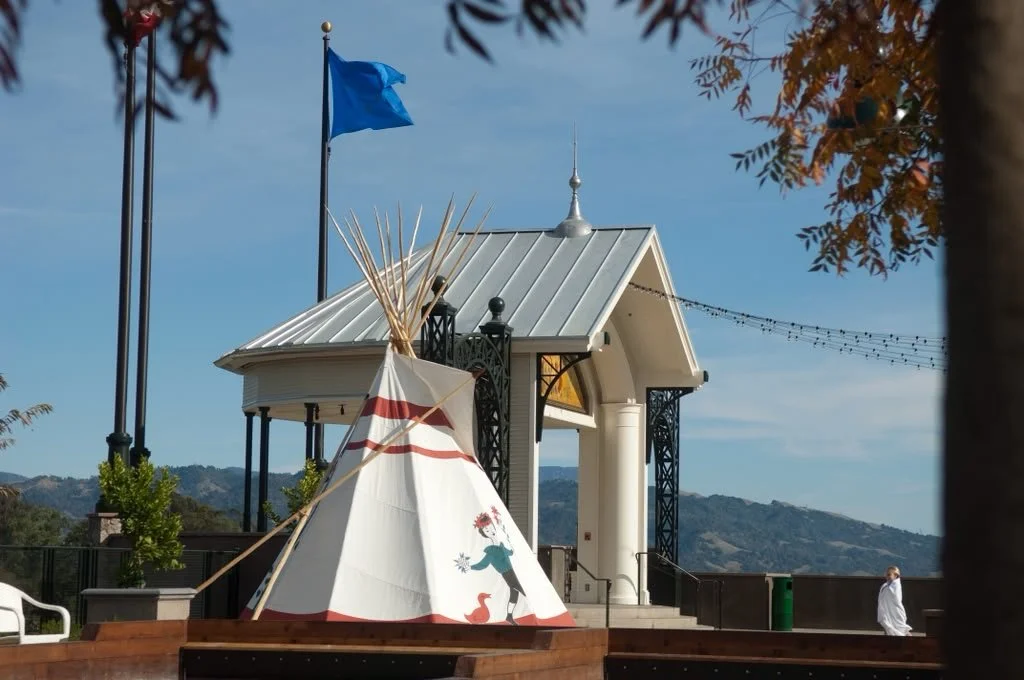
Start with the teepee, because the photographs do. It stands alone on the open ground at the Francis Ford Coppola Winery, white canvas, red at the base, its poles reaching into a sky so wide the structure looks less built than believed. There is another by the pool, in the middle of the resort machinery of leisure, umbrellas and blue water, and it is not embarrassed by the company. A teepee is the first architecture of the imagination: before the house, before the studio, before the kingdom, there is the tent a child raises and declares sovereign territory, a country of one blanket and total artistic freedom. Every film set I have ever stood on is this object, enlarged and unionized. The director's whole career is the refusal to move out of it.

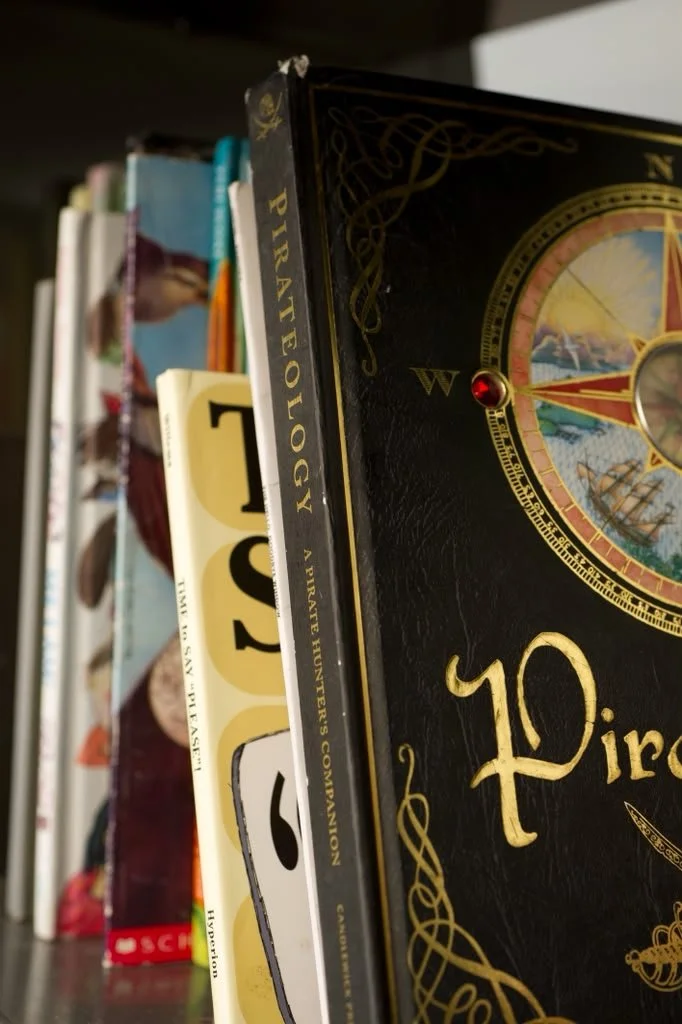
Then the books complete the confession. Shelf after shelf of them, old adventure volumes with hand lettered spines, each title painted like a promise: pirates, voyages, escapes. A stack of them sits bound in faded cloth, yellow, green, blue, the colors of a boyhood spent reading under the exact light boys have always read by, the light of being somewhere else. These are not props. They are the estate's founding documents. Before Coppola directed anything, he was an audience, a sickly kid, by his own telling, who lived in books and puppet shows while the world happened elsewhere. The winery, the museum, the gate with the harlequin diamonds: all of it is that sickroom library, finally given land and weather.

There is a sociology of success hidden here that I find quietly moving. Most powerful men build monuments to the moment of conquest: the office tower, the acquired company, the portrait in the lobby. Coppola built a monument to the moment before conquest, to the reading and the pretending that made conquest imaginable. The estate does not say look what I became. It says look what I was reading when I decided to become it. That is a rarer and better sentence for a life's work to pronounce.

And the two objects rhyme in a way that closes the argument of these three days of photographs. The teepee is the story as shelter: you crawl inside and the world becomes narrative. The book is the story as voyage: you open it and the shelter becomes the world. Between those two motions, outward and inward, tent and text, sits every film ever made, including the ones shot a few miles of shelves away from these very spines, in the imagination of the boy who grew up to sign his name over a gate in gold.

The roses guard the vines. The books and the teepee guard something more perishable: the beginner. Keep him safe, the estate argues, and the empire takes care of itself.

Yi Zhou