Grace Wears an Apron: Anthony Bourdain, Apprenticeship, and the Honest Kitchen

Every legend is an editing decision, and the bravest cut is the one that removes the fame.

Tony, directed by Matt Johnson and screened tonight at USC's Eileen Norris Cinema Theatre courtesy of A24, with the director and the film's producer in conversation afterward, is built entirely on that cut. The film refuses the whole architecture of the modern biopic: no rise montage, no destiny foreshadowed in every childhood scene, no famous man waiting at the end of the corridor to validate the boy. It gives us instead one summer, Provincetown, 1975, and a nineteen year old Anthony Bourdain who is, by the film's own cheerful admission and by Bourdain's own later confession, a spoiled, drifting, self destructive young lout with a vague dream of being a writer and no evidence whatsoever to support it. Then a restaurant kitchen takes him in, and the film becomes the story of the only honest education he ever received.

The performance at the center understands the assignment perfectly. Dominic Sessa does not impersonate Bourdain, which would be a party trick, and does not embalm him, which would be a eulogy. He plays the prior condition: appetite without discipline, intelligence without a trade, a boy whose charisma is entirely defensive, a way of talking himself out of rooms his hands have not yet earned the right to stand in. Opposite him, Antonio Banderas plays the kitchen's presiding chef as a kind of weathered god of the line, and the scenes between them carry the film's thesis in purely dramatic form. A vocation does not descend. It is supervised into existence, by someone who has already survived it, in a room where standards are not a philosophy but a temperature.

Because the kitchen, as this film photographs it, is the last honest republic. Sociology keeps rediscovering what line cooks have always known: that there exist hierarchies which are not corrupt, because they are indexed to competence in real time. Your family name buys nothing at the pass. Your intentions are worth less than your knife cuts. The burn on your forearm is a credential no institution can issue and no résumé can fake. Bourdain's later genius as a writer, the voice that made Kitchen Confidential a classic and turned a chef into a generation's traveling conscience, is usually treated as a literary event. Tony argues it was a culinary one first. The prose moves like a service because its author learned time in a kitchen. The honesty reads like a scar because it began as one. Before the sentences, the station. Before the writer, the worker, being remade nightly by heat and hierarchy into someone whose word could eventually be trusted.

There is a metaphysical modesty to the film that I found moving, and rare. Most origin stories are actually destiny stories, flattering the audience with the idea that greatness is visible early to those who know where to look. Tony insists the opposite: that the summer which changes a life looks, while it is happening, exactly like a summer job, that grace wears an apron and smells of fish and dishwater, and that the difference between the boy who washes out and the boy who becomes Bourdain is not talent but submission, the willingness to be apprenticed, corrected, burned, and kept. It is a film about a legend that behaves, scene by scene, like an argument against legends, and it is the more mythic for it.

And the conversation afterward belonged to the same argument. Hearing the director and the producer speak about the making of the film, in a theater full of students who are all currently inside some unglamorous summer of formation, the evening completed itself: a film about apprenticeship, discussed by its makers, in the one building in Los Angeles where apprenticeship is the entire curriculum. Thank you to USC for the screening, and for sending us out into the night in the company of that argument. The summer counts.

Yi Zhou
A Federation of Crafts: Reflections on the Morning of Deadline Contenders

📷 photos by Yi Zhou and Yi Zhou Studio

Deadline Contenders: The Morning Session

There is a specific happiness available only in rooms like this one, and I want to thank Deadline for manufacturing it by the hour.

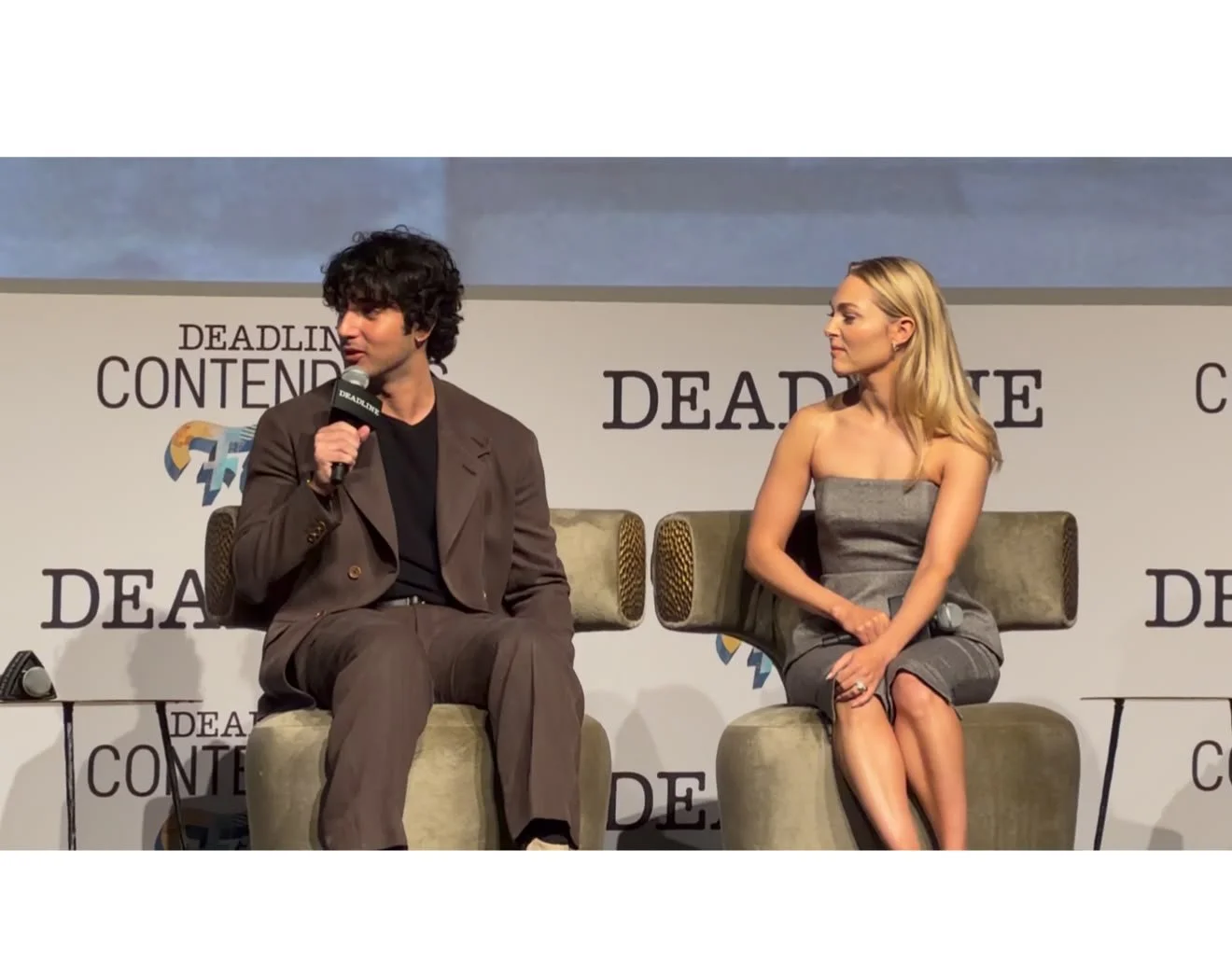
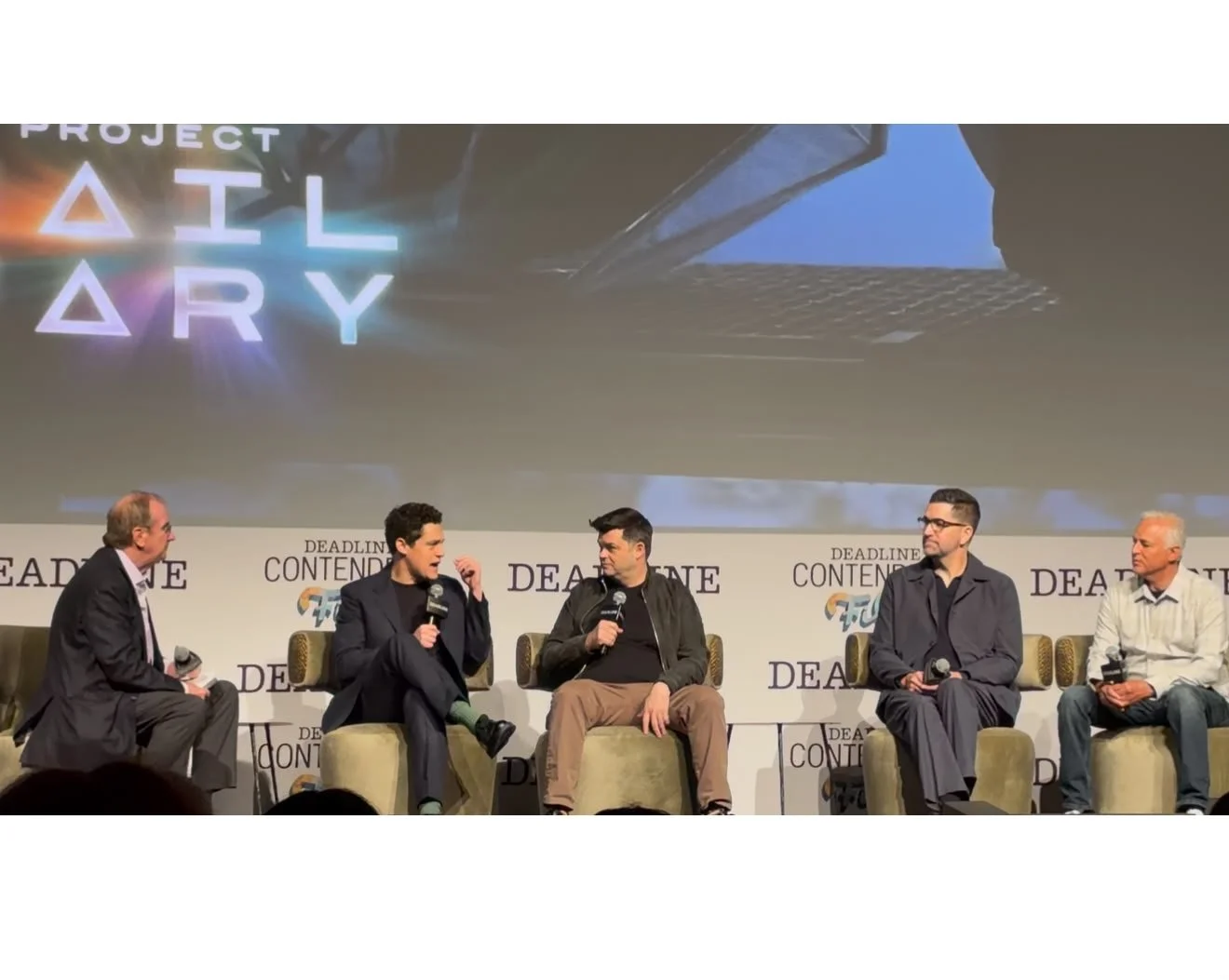
The morning of Contenders, up to lunch, played like a curriculum designed by someone who understands that filmmaking is not one craft but a federation of them. It opened in the company of Siân Heder and Ruth Madeley discussing Being Heumann, and Jennifer Peedom on Tenzing, with Rebekka Karijord's composing in the conversation, and it moved through the stop motion cosmology of Laika's Wildwood, Travis Knight directing, Caleb Deschanel photographing, proof that the handmade still outruns the rendered when patience is the budget. Sony Pictures Classics brought Florian Zeller with Penélope Cruz for Bunker, and John Turturro and Tatiana Maslany for The Only Living Pickpocket in New York, two acting masterclasses disguised as panels. Amazon MGM gave us Bassam Tariq with John Cho and Son Lux for Your Mother Your Mother Your Mother, a title you say three times like an incantation, and the morning kept widening: Project Hail Mary, then Peter Farrelly with the I Play Rocky team, Anthony Ippolito, AnnaSophia Robb, casting director Rick Montgomery, before the Hall of Fame presentation honored Farrelly himself. Jared Bush and Dana Ledoux Miller closed the session with Walt Disney Animation's Hexed, the studio's future discussed by the people currently drawing it.

📷 photos by Yi Zhou and Yi Zhou Studio

How lucky, is the only honest summary. Lucky to listen to a cinematographer explain patience, to composers explain restraint, to actors explain the exact second a character turns. Awards season has a reputation for vanity, and some of it is earned, but mornings like this one are its redemption: the contenders, seated in a row, doing the least glamorous and most generous thing artists can do, which is to describe the work truthfully and let everyone in the room steal the lesson.

Thank you, Deadline. Lunch could wait. I was taking notes like a student, and I mean that as the highest compliment this industry allows.

Yi Zhou

The Telly Awards: An Inclusive House

📷 photos by Yi Zhou

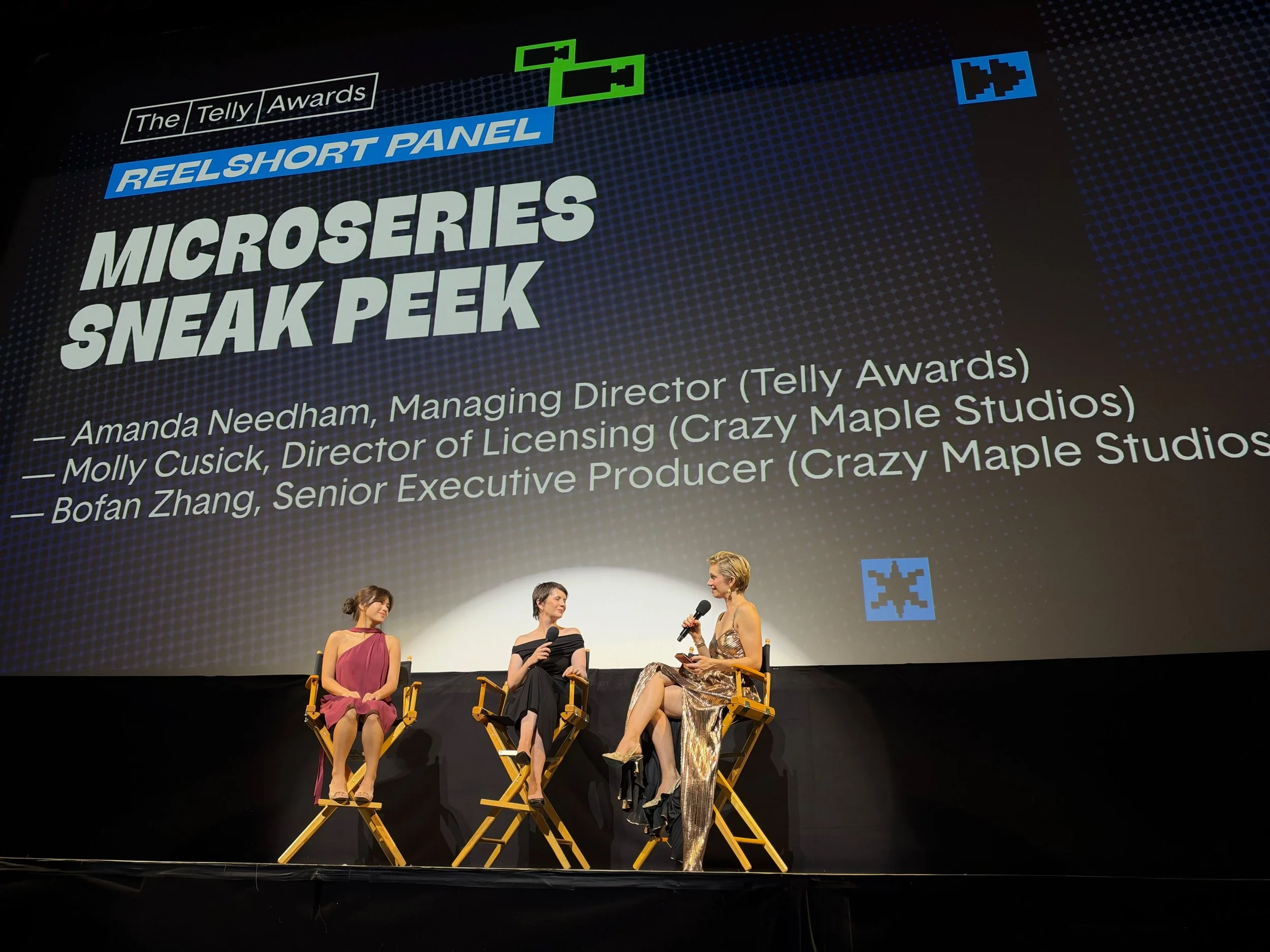
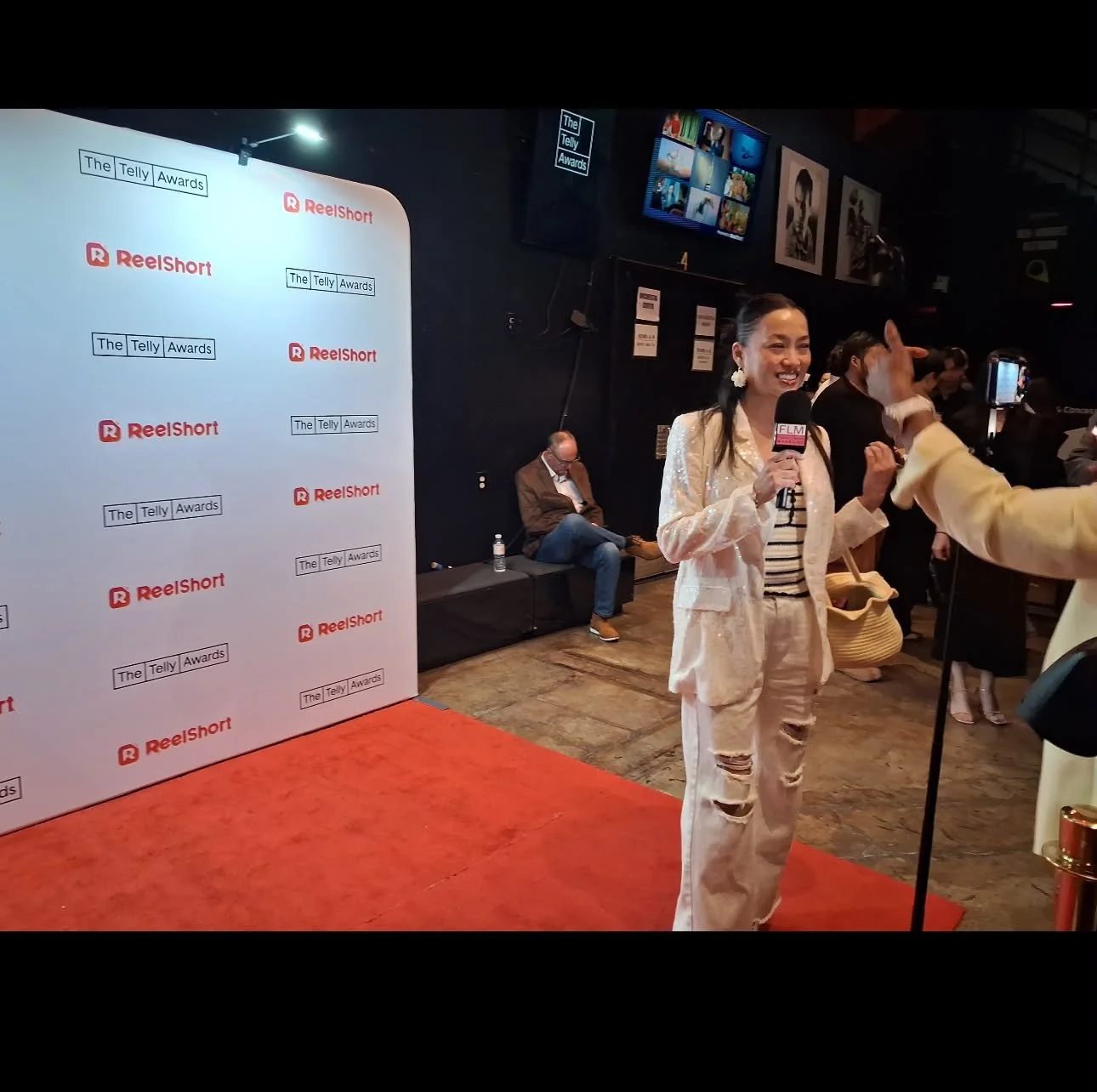
Thank you, first and properly, to the Telly Awards for the invitation, and for a night at The Montalban that left me thinking. I came as a guest. I left as a student of an institution that has quietly understood something the rest of Hollywood is still arguing about at panels.

What impressed me was the range. Category after category, the award refuses the old hierarchy that said some screens count and others do not. And inside that range, something genuinely new: real space held open for technology, for native AI work, for generative AI work, and for mini drama, not as curiosities, not as a novelty corner, but as citizens. I do not use that word lightly. Citizenship is the whole question of this era. The new Hollywood is being built right now by creators, technology, and AI blending into the fabric of the industry, shot by shot and credit by credit, and the mature question is not whether the blending happens. It is whether it happens legally, legitimately, and peacefully, with authorship honored and livelihoods respected on every side. An award that gives these forms a home is doing more than recognizing work. It is drafting the terms of coexistence.

Inclusivity is a word this town prints on banners and forgets by dessert. Tonight it looked structural instead: a 47 year old award deciding that its tent grows or it does not deserve to stand. For a creator who works across film, music, technology, and AI, who has stood in the rooms where the old rules are defended like heirlooms, there is something moving about an institution that simply opens the door wider and lets the future RSVP itself.

Honored to have been there, and to have discovered the award properly at last. The fabric of Hollywood is being rewoven in public. Tonight I watched some of the kindest hands doing the weaving.

Yi Zhou

Playing Shakespeare: When Four Hundred Years Feel Like a Rumor

📷 photos courtesy of Playing Shakespeare, Yi Zhou Studio

Playing Shakespeare: The Plays Were Modern All Along

The question this short film asks is not whether Shakespeare can survive modernity. It is whether we can survive the discovery that he invented half of it.

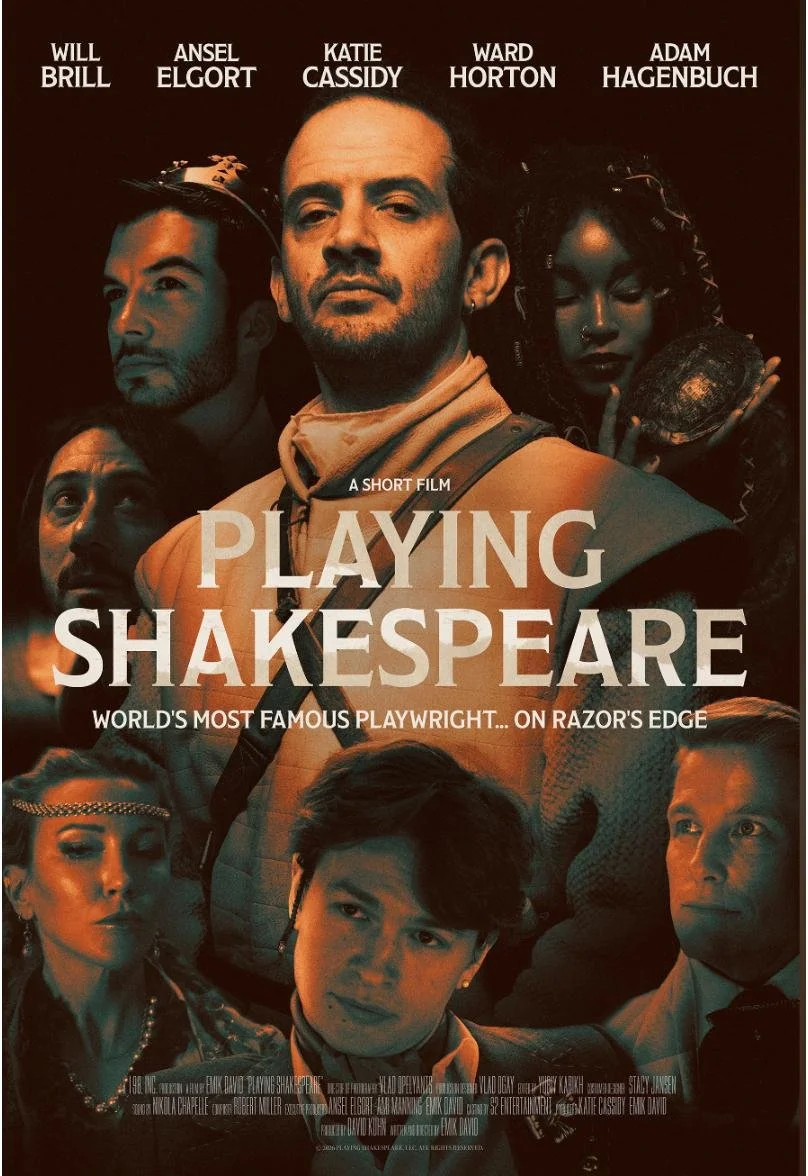
Playing Shakespeare, written and directed by Emik David and shot in Connecticut, performs a quiet act of chronological sabotage. Will Brill plays Shakespeare himself, the world's most famous playwright placed on razor's edge, alongside Ansel Elgort and Katie Cassidy, with Ward Horton and Adam Hagenbuch completing an ensemble that treats the material as a living colleague rather than a monument. The costumes suggest now. The cadence of the performances suggests now. The dialogue, the actual words, keep detonating with a modernity that no amount of period staging can domesticate, and somewhere in the friction between the three, the viewer's sense of period simply gives up. Is this the present dreaming of the past, or the past caught rehearsing the future? Across 19 minutes that move between historical drama, backstage comedy, and character study, the film is too intelligent to answer, and too in love with its material to need to.

I should confess my bias early, because it is the whole review. I studied theater for years in my teenage years in Italy, and I have never recovered, in the best sense. Theater was my first conservatory: before the cameras, before the scores, there was the stage teaching me that a text is not read, it is survived, nightly, in the body. I have been fascinated by it ever since with the loyalty of a first language. So a film that takes theater, and the man who defines it, as its subject is not, for me, a genre. It is a homecoming.

And what moved me most is precisely the marriage this short performs between the two arts that formed me. Theater is presence: breath, risk, the unrepeatable take that happens once and evaporates. Cinema is memory: the take kept, the gesture embalmed in light, Connecticut standing in for every place a stage could not travel to. To film actors playing Shakespeare, playing at being the people who first played Shakespeare, is to let presence and memory collaborate instead of compete. The camera does not flatten the theatricality. It frames it, the way a proscenium would, and then does the one thing no proscenium can: it moves closer, into the actor's face, where the verse stops being literature and becomes thought, visible, in real time.

Connecticut matters more than it might seem. Shakespeare in America has always been an argument about inheritance: whose language is it now? Setting the plays down in New England light, among American rooms and American faces, the film gives the only correct answer. It is the language of anyone brave enough to speak it as if it were theirs. The costumes complete the argument. Dress the plays in our clothes and you discover the clothes were never the period. The jealousy is the period. The ambition is the period. The love, arriving too late and dressed wrong, is the period.

I loved this film, plainly, and as a reunion. Some of us meet Shakespeare in school and file him under homework. Some of us meet him on a stage in Italy as teenagers and spend the rest of our lives trying to deserve the meeting. Playing Shakespeare is made by people from the second category, for anyone willing to join it.

Yi Zhou