📷 photos courtesy of Francis Ford Coppola Winery and Yi Zhou Studio
The third day of looking at this estate, the theme finally declares itself, and it is not wine. It is childhood, preserved at industrial scale.
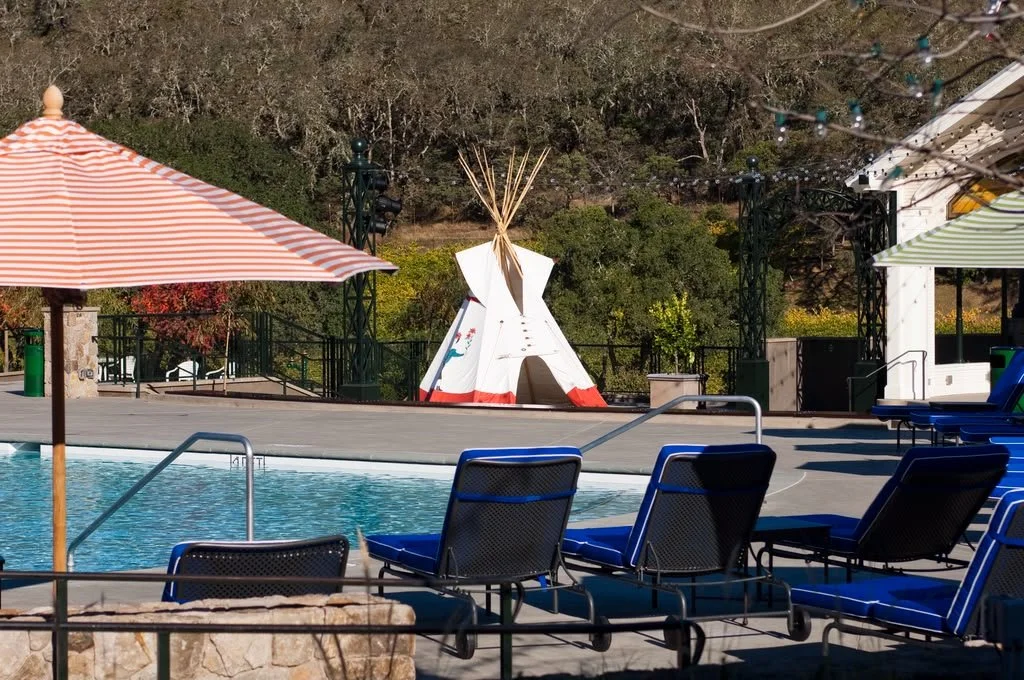
Start with the teepee, because the photographs do. It stands alone on the open ground at the Francis Ford Coppola Winery, white canvas, red at the base, its poles reaching into a sky so wide the structure looks less built than believed. There is another by the pool, in the middle of the resort machinery of leisure, umbrellas and blue water, and it is not embarrassed by the company. A teepee is the first architecture of the imagination: before the house, before the studio, before the kingdom, there is the tent a child raises and declares sovereign territory, a country of one blanket and total artistic freedom. Every film set I have ever stood on is this object, enlarged and unionized. The director's whole career is the refusal to move out of it.
Then the books complete the confession. Shelf after shelf of them, old adventure volumes with hand lettered spines, each title painted like a promise: pirates, voyages, escapes. A stack of them sits bound in faded cloth, yellow, green, blue, the colors of a boyhood spent reading under the exact light boys have always read by, the light of being somewhere else. These are not props. They are the estate's founding documents. Before Coppola directed anything, he was an audience, a sickly kid, by his own telling, who lived in books and puppet shows while the world happened elsewhere. The winery, the museum, the gate with the harlequin diamonds: all of it is that sickroom library, finally given land and weather.
There is a sociology of success hidden here that I find quietly moving. Most powerful men build monuments to the moment of conquest: the office tower, the acquired company, the portrait in the lobby. Coppola built a monument to the moment before conquest, to the reading and the pretending that made conquest imaginable. The estate does not say look what I became. It says look what I was reading when I decided to become it. That is a rarer and better sentence for a life's work to pronounce.
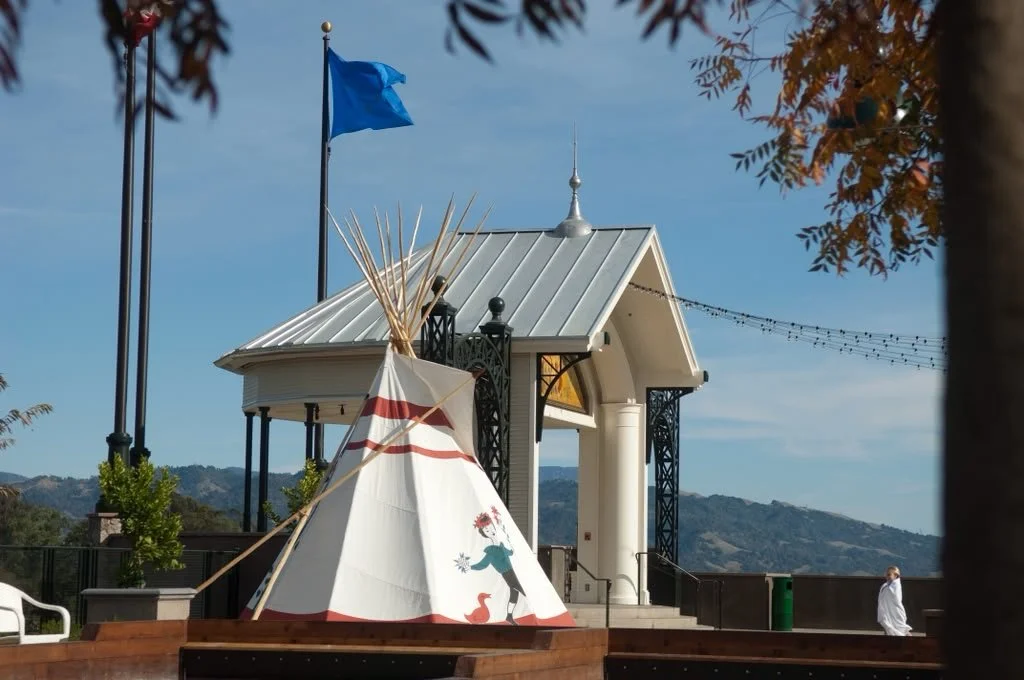
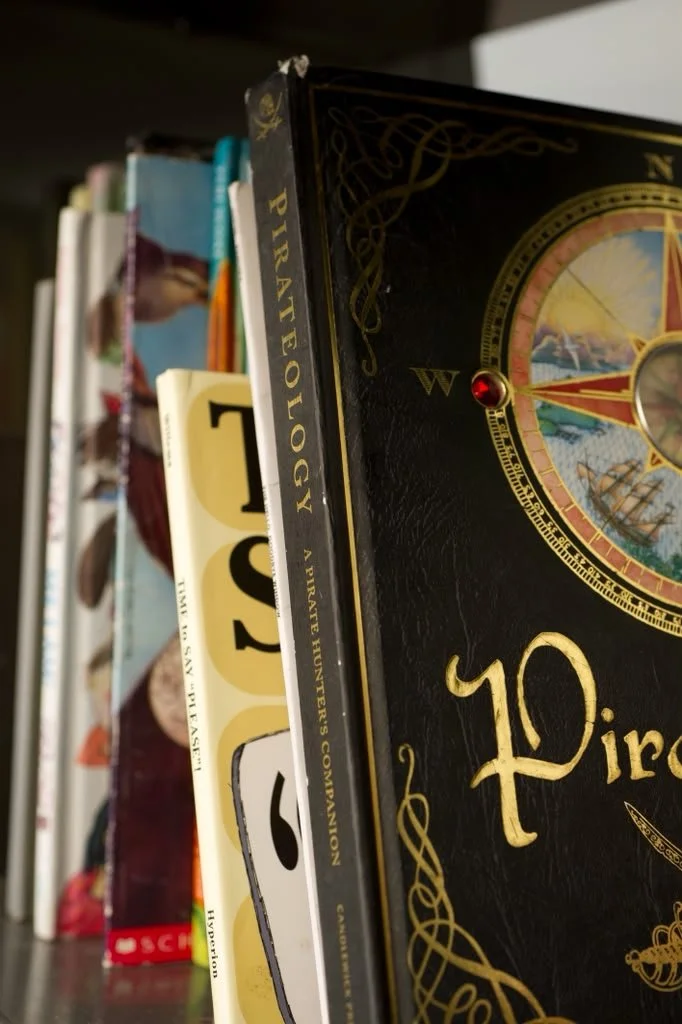
And the two objects rhyme in a way that closes the argument of these three days of photographs. The teepee is the story as shelter: you crawl inside and the world becomes narrative. The book is the story as voyage: you open it and the shelter becomes the world. Between those two motions, outward and inward, tent and text, sits every film ever made, including the ones shot a few miles of shelves away from these very spines, in the imagination of the boy who grew up to sign his name over a gate in gold.
The roses guard the vines. The books and the teepee guard something more perishable: the beginner. Keep him safe, the estate argues, and the empire takes care of itself.
Yi Zhou